Welcome, travelers, to the den of the Sniper Troll. Here, if you want, you can read me rambling about Trench Crusade. Be aware! You won’t likely find the secret to win every game here, but I will nonetheless try to do my best to put my questionable expertise at the service of the community and new players which, as I have witnessed, are approaching the world of wargames for the first time thanks to this amazing game.
So, let’s say we start from the beginning…
What is this Trench Crusade game you are blathering about?
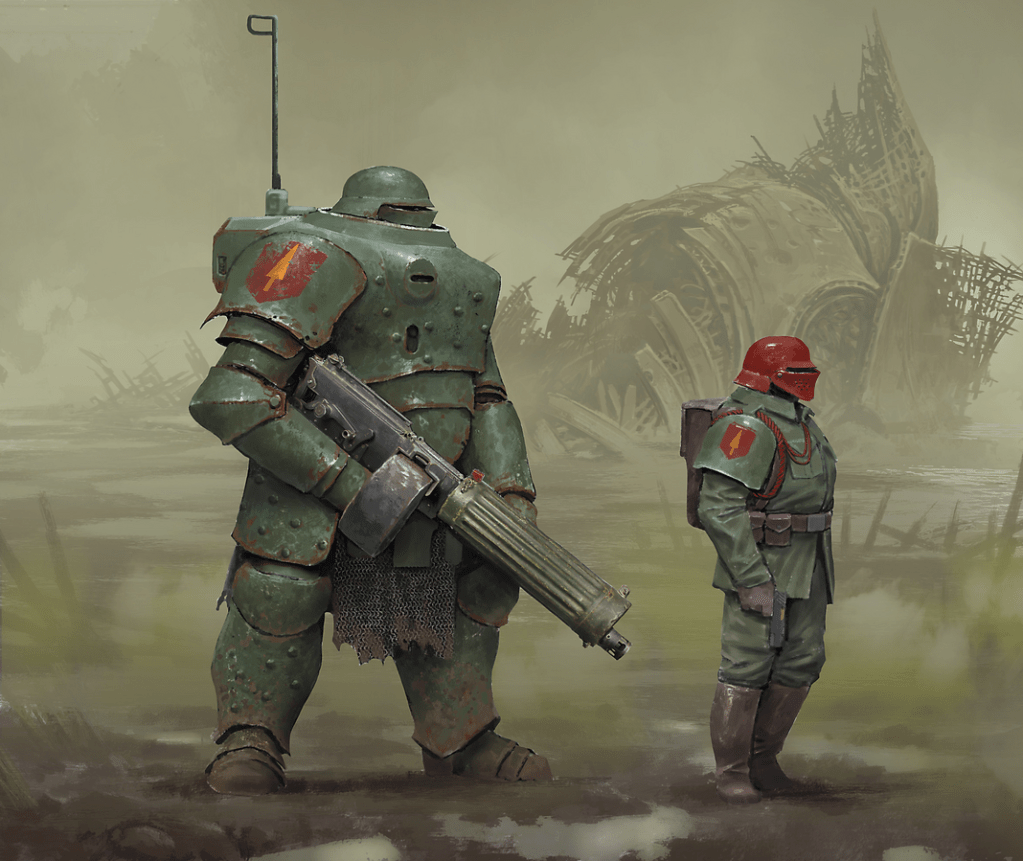
Born from the creativity of visionary artist Mike Franchina (whose portfolio includes artwork for Magic: The Gathering, Diablo IV and Path of Exile), miniature sculptor James Sheriff and game designer Tuomas Pirinen (creator, among others, of Mordheim and lead designer of the 6th edition of Warhammer Fantasy Battle), Trench Crusade is a skirmish-scale tabletop wargame (that is, where players control bands of a limited amount of models, usually 5-10 or so). The game is set in an alternate-history parallel of our world, where humanity faces the infernal forces in centures-long world conflict tracing back to the First Crusade. Back then, a heretic band of Knights Templar cast aside their sacred vows and dared to defy the Almighty, causing the very Gates of Hell to open where the Holy City of Jerusalem once lied.
It is now Anno Domini 1914, and the forces of the Faithful and the Hellish powers are locked in an endless attrition war, no side managing to obtain lasting, significant advantage. In the endless front, among the trenches, artillery emplacements, mud, barb wire and mine fields of No Man’s Land, small bands of warriors skulk around, attempting to breach across the enemy lines to gather precious information, sabotage supply lines or recover artifacts lost in centuries of war, all with the aim of finding that small advantage that could tip the balance and allow their faction to strike the decisive blow.
It is a brutal world, where life is short, faith is constantly put to the test, and heroic deeds go often unsung.
Interesting, how do I play?
Trench Crusade has a rather lightweight rules system, designed to require minimal bookkeeping and to promote fast and cinematic action.
A typical Trench Crusade game revolves around a scenario, in which two players pit their warbands of 3-10 models one against the another in an attempt to fulfill their mission objectives. Each scenario details how the board is set up, where the players deploy and each player’s victory conditions. The suggested playing surface is between 3×3 and 4×4 feet (that’s about 90×90 to 120×120 cm for us all who live in countries that use measurement units that make sense).
Each scenario is fought over a number of turns. During each turn, players alternate in activating their models, one at a time; when a model is activated, it can perform a certain number of ACTIONS, like moving, shooting, attacking in melee… the usual options you would expect in a tabletop wargame. But here’s a twist: models in Trench Crusade are not limited to a set amount of actions per activation, instead they can take as many actions as you like, in any order: you can move, shoot a gun, then duck into cover, or charge an enemy, strike it down in melee and then shoot another foe in a cinematic fashion. There are limitations of course, but I won’t delve much into detail here, as I have some in-depth rules explanation articles planned; for this overview it’s enough to say that some actions are mutually exclusive, you can’t, as a general rule, repeat the same action, and certain actions carry the risk of forcing the end of the model’s activation, usually in a spot you don’t want it to be.
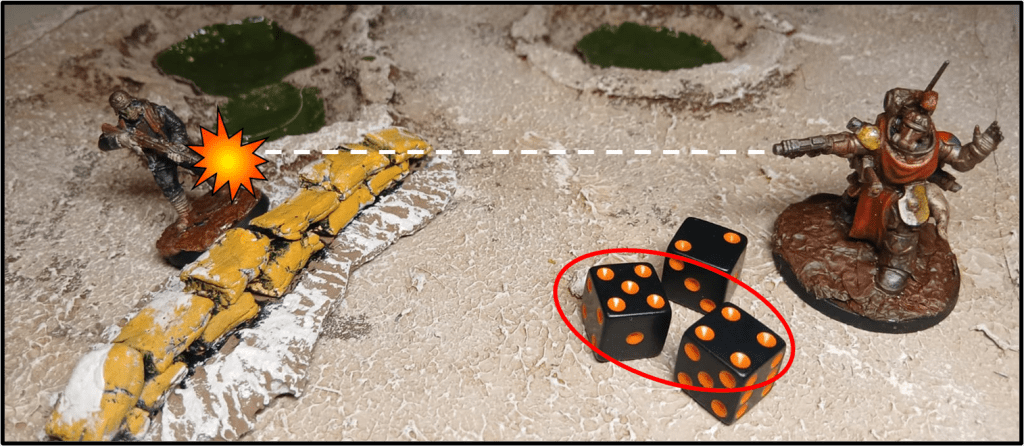
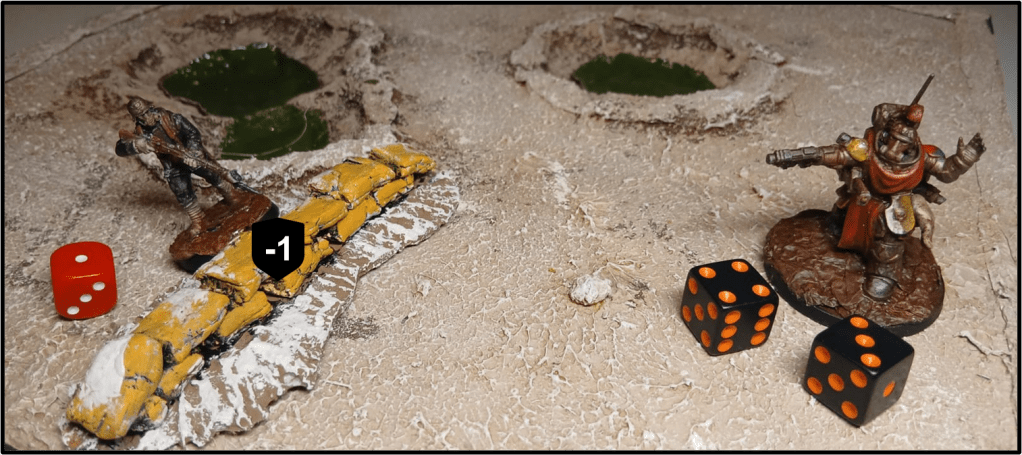
Many actions require a dice roll to succeed, and here’s another peculiarity of the system: your base dice roll is always 2 six-sided dice (2d6), with a total score of 7 or more counting a success. Modifiers come in the form of bonus or penalty dice (styled as +DICE and -DICE respectively). These are dice that are added to the pool you roll, and then you’ll pick the sum of the two highest (in the case of +DICE) or lowest results (in the case of -DICE) as your score. When both +DICE and -DICE are applied to the same roll, they cancel each other until only one of the two modifiers remains.
Most of the times, if you fail your roll you can carry on with your turn, but several actions are RISKY: failing such an action immediately ends the model’s activation. It goes without saying that these action include most tactically advantageous options (such as the Dash Action, that allows additional movement) introducing a very interesting – at least for me – decision space: do you want to take a risky action earlier in the round, knowing that you could waste most of the model’s turn, or is the best course of action to do your turn and then attempt to dash back to safety, with the risk of leaving your model in an exposed position? Knowing when to take risks can make the difference on the battlefields of Trench Crusade.
Now, Trench Crusade is a tabletop wargame so it’s no surprise that sooner or later you’ll want to shoot and stab your opponent’s toy soldiers and gloat while they lie face down in the mud. All these funny activities are possible by having your models make Attack actions with the weapons they are equipped with. First you check if the target is within the range of the weapon, and if your model can see it (no weird targeting rules here, Trench Crusade uses a “True Line of Sight” system: if you can see at least part of the opponent from your model’s perspective, you can attack it), then you make an Action roll as described above, with +/- DICE modifiers taking into account the attacker’s skill, weapon accuracy, long range, cover etc. and finally, if you hit, you make an Injury Roll to see how much damage your attack has done.
An Injury Roll works in a similar way an action success roll, you roll 2d6 and apply any relevant +/- DICE modifiers, with the model’s armour value (from 0 to -3) being subtracted from the final result. Here there can be different degrees of success, depending on the number rolled:
- On a 1 or less, the attack has no effect: it bounces off the target’s armour, or it’s just a superficial wound.
- On a 2-6, the target suffers a Minor Hit and receives a Blood Marker. These markers (usually tracked by placing a red die next to the model) can be spent by the model’s opponent to hinder its action or to make it more susceptible to further injuries.
- On a 7-8, the attack is serious enough to knock the target down. In addition to receiving a Blood Marker a Downed model is more vulnerable to attacks and cannot move until it stands up in their next activation.
- On a 9 or more, the target is seriously wounded, rendered unconscious or otherwise unable to continue fighting: it is Out of Action and is removed from play.
The turn continues alternating back and forth until all models from each side have been activated once, then a new turn begins, with the player currently controlling the least amount of models activating first (in case of a tie, players roll-off to decide). This goes on until the scenario victory conditions have been fulfilled or a certain number of turns (usually 4 to 6, depending on the scenario) have been played. In most scenarios, players will be forced to make a Morale Test at the end of a turn if more than half of their models are currently Down or Out of Action, forcing an early retreat in case of failure.
Though the core rules are simple, there are of course many nuances that come with the various models, special abilities, weapons and equipment, which all affect the game in a way or another. Moreover, though it is feasible and fun to play single scenarios, Trench Crusade is designed around campaign play: a series of interconnected games in which each player’s warband will evolve, gaining new abilities a special equipment as the campaign progresses, while injuries suffered by models carry on from a battle to the next. There’s too much to fit into a single page however, so stay tuned for further updates: sooner or later we’ll address every single aspect of the game!
Who is fighting in the Great War?
In order to play a Trench Crusade game, you’ll need to create a warband, which starts by choosing one of the factions, which represent the main contenders in the Great War in Anno Domini 1914.
I will talk about the possible variant lists for each factions and show you how to create a warband and equip your models in a later article, for now let’s just have a brief look at the six playable factions that are currently in the game.
For centuries, the Principality of New Antioch has stood as the valiant defender of the Church, right in the heart of the Holy Land and just a few miles across the Gates of Hell. The fate of Christendom tightly bound to that of the Principality, all Faithful nations send a yearly tithe of food, equipment and skilled volunteers, both civilians and soldiers to bolster New Antioch’s defenses. New Antioch’s warbands are well trained and equipped with high quality gear. They excel in close-quarter firefights, where their superior weaponry and the teamwork of their solders result in a devastating mix.
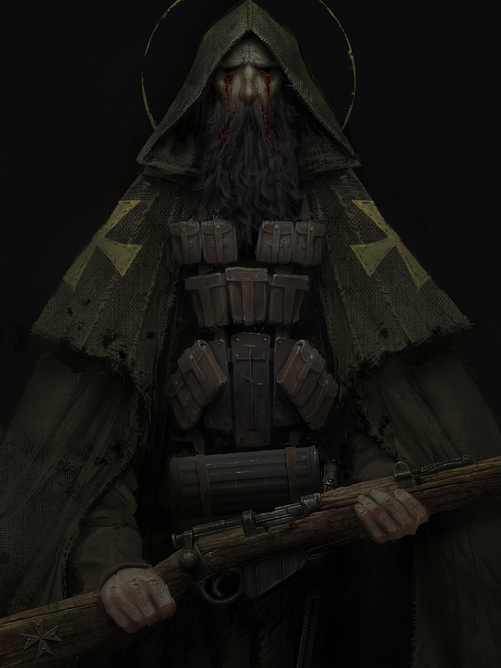
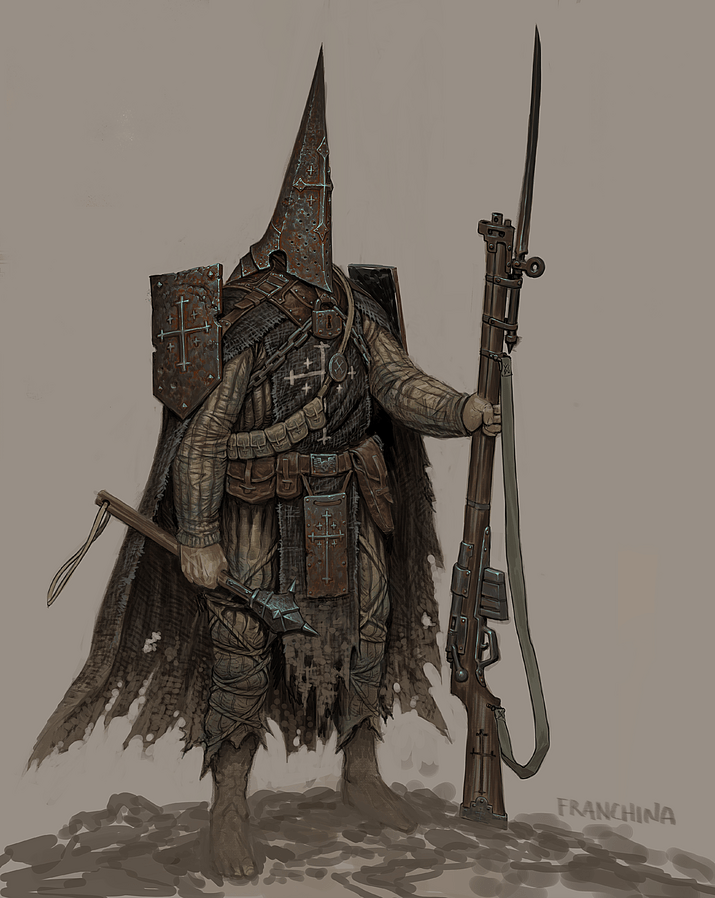
Inspired by visions of doom and signs of prophecy, the Trench Pilgrims gather around charismatic leaders and form processions of devout warriors, driven towards No Man’s Land. What they lack in training or equipment, they make up with religious zeal and unwavering faith, bringing the righteous wrath of the Lord and the fires of His retribution to anyone that stands in their way. Hulking Communicants and brutal Shrine Anchorites pummel the foe, while the fanatic Pilgrims overwhelm the enemy lines, not caring about wounds that would fell less zealous men.
In the early decades following the opening of the Gates of Hell, many of the Faithful found safety behind the Invincible Iron Wall of the Two Horns that Pierce the Sky. Hundreds of year later, the mighty Iron Sultanate still stands proud against the demonic forces, its population thriving and preserving ancient arts, protected by stalwart defenders, mystical assassins and the alchemical marvels of the House of Wisdom. The forces of the Iron Sultanate are fast and flexible, preferring to engage the enemy at range while their quicker, most mobile warriors, harass the opposing lines and strike vulnerable spots.
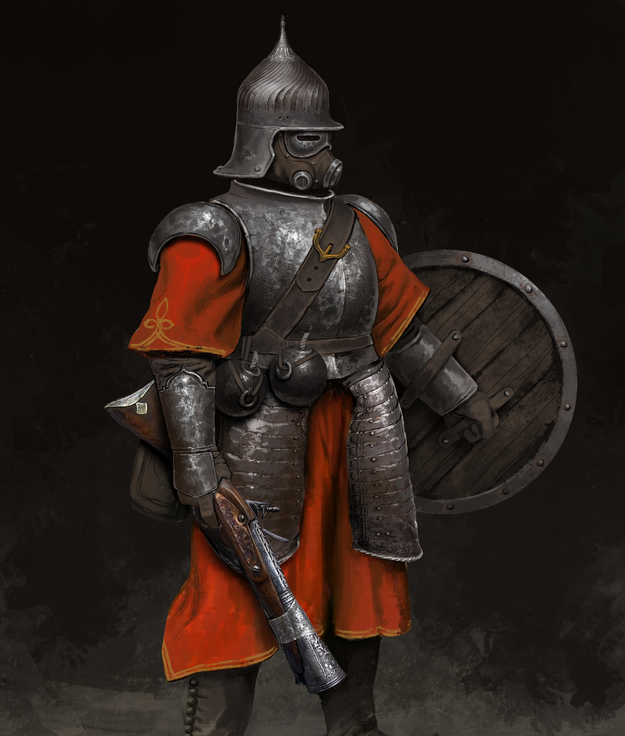
During the centuries since the Great Heresy, the relentless advance of the demonic forces caused about one third of the world’s population to fall under the grasp of the denizens of Hell. Life among heretic lands is short and brutal, where the weak suffer and the strong thrive. Among them, the greatest status is reserved to the soldiers fighting in the Great War, as only the most ruthless and wicked souls can survive the pilgrimage to the Gates of Hell and deemed worthy to join the Heretic Legion. Supported by lethal specialists and powerful artificial creatures, Heretic warbands can strike the enemy from any position.
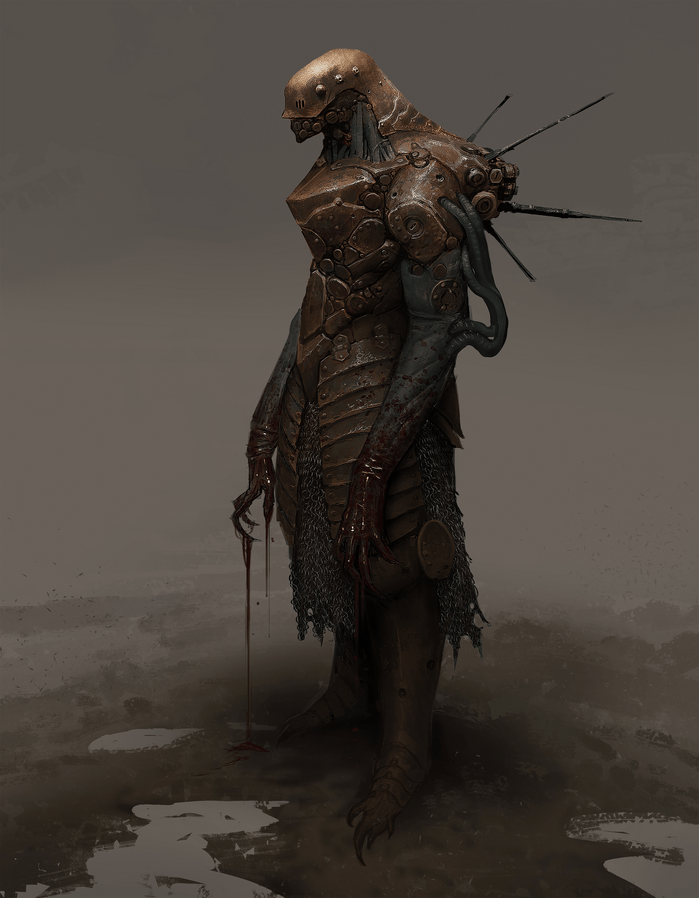

Composed by the most powerful arch-demons, the Court of the Seven-Headed Serpent is the ruling council of Hell and oversees the titanic war effort against all Creation. As the Covenant of Hell prevents full-fledged demons to cross into the mortal world, its agents are composed by creatures that are partially mortal, yet, supported by powerful Goetic magic and bizarre reality-bending weaponry, these spawn of Hell are still some of the most dangerous creatures one can face across the battlefield. For this reason Court warbands tend to be small, elite forces, with powerful demonic monsters supported by lesser, disposable minions.
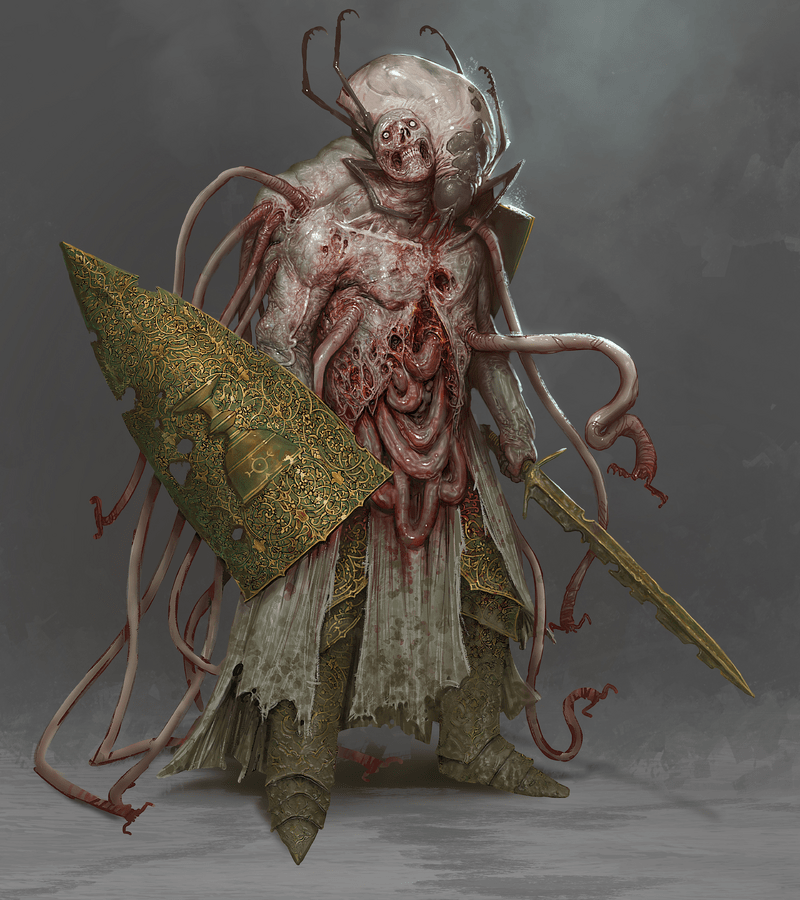
The most foul creation of the demon lord Beelzebub, the Black Grail is a horrendous disease that spreads around the world, causing disfiguring tumors and endless pain. Neither living nor dead, any victim, be it beast or human, is overwhelmed by the demonic will of the Lord of the Flies and driven only by the desire to further spread the contagion. Bands of the Cult of the Black Grail are a dreadful sight, hordes of disfigured corpses, relentlessly marching forward, insensible but to the most grievous wounds, their deadly masters towering among their ranks, wielding infectious weapons who can kill with a mere scratch.
So, how can I actually play?
By the time of the writing of this article (January 2025), Trench Crusade has been successfully funded through a Kickstarter campaign. STL files have been made available to backers for download in December 2024, and physical miniatures are currently being produced and will be delivered to backers in the first half of 2025.
For those who missed the campaign, STL files will soon be made available for purchase on sites like myminifactory, while physical miniatures will be released later this year, after all the Kickstarter backers’ orders have been fulfilled.
In the meantime, do not despair! Trench Crusade is at its core a miniature agnostic game: kitbashing, conversions and use of third-party miniatures are endorsed by the game’s creators or by the community so you have no excuses not to start building your warband right now.
As for the rules, they are available for free on the Trench Crusade website. Just a little disclaimer here: the game is still in playtesting stage, and the rules – while basically consolidated in their core – can and will be subject to changes and adjustments during this period, so I advise you to regularly check the Trench Crusade website and social media channels for updates. You can find all the information in the Links and Resources page.
And that’s all for now. Next time, we’ll start with basic training: activations, actions and dice rolls. Until then, keep your bayonet sharp and gas mask at hand!

 A Troll in the Trenches
Leave a comment